
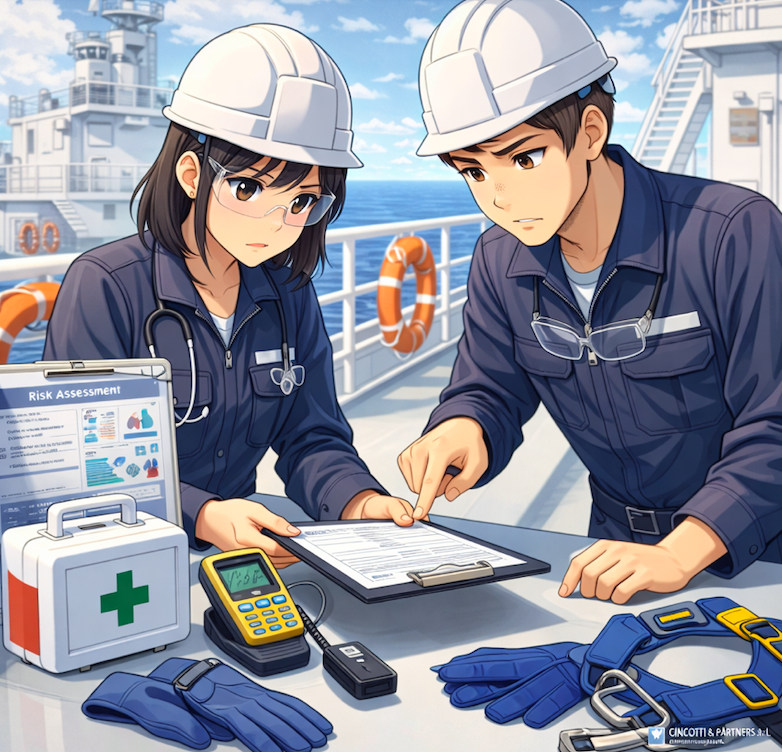
Seafarers operate in a high-risk environment, far from home, often under intense operational pressure. Japan P&I Club’s message is clear and practical: preventing personal injuries starts with the basics—strictly following procedures and planning non-routine work properly. Automation may support operations, but most tasks are still carried out by people, and human error remains a critical factor in incidents.
The framework: ISM Code and non-negotiable priorities
Under the SOLAS ISM Code, companies develop safety manuals and procedures around three core aims: safety of human life, safe operation of the vessel, and protection of the environment. Among these, the safety of human life is absolute—loss of life is irreversible. That principle must drive decision-making on deck, in cargo spaces, and during every operation.
The golden rule: follow procedures—and plan non-routine work
If a procedure exists in the Safety Management Manual, it must be followed without shortcuts. For new, special, or non-routine tasks, the correct sequence is consistent:
- conduct a risk assessment first,
- eliminate or reduce hazards,
- prepare a written work plan (roles, communications, emergency response),
- brief the entire team,
- simulate the workflow,
- execute exactly “as planned”.
This structure prevents the typical accident pattern: a chain of small human errors escalating into a serious event.
Real deck cases: where injuries happen most
The reported cases highlight recurring risk zones:
1) Fingers caught between hatch covers
Hatch cover operations involve heavy moving structures. The key control is disciplined area management: keep personnel clear until movement stops and the cover is fully secured.
2) Mooring snap-back injuries
When tension exceeds a line’s strength, it can part and recoil violently. Two practical rules: avoid excessive tension on any single line and never stand in snap-back zones. Positioning is as important as technique.
3) Passing traffic waves, poor tension control, and a collapsed portable gangway
External forces can rapidly change loads and vessel position. Continuous tension monitoring and proper securing of equipment (such as portable gangways) are essential controls, not optional extras.
4) Falls on vertical ladders in cargo holds
Condensation and wet surfaces make vertical ladders slippery. Where appropriate, fall-prevention measures (including harness use) should be applied, supported by strong situational awareness.
5) Enclosed space oxygen deficiency: the fatal trap
A cargo hold can be an enclosed space—even on dry cargo vessels—and crews may underestimate the risk. Controls must be procedural and strict: ventilation, gas detection, entry permission, regular training, and internal audits to confirm correct execution. “It’s just a quick check” must never be accepted on board.
Conclusion: operational discipline and leadership at the worksite
Prevention works when supervision is active, communications are clear, hazardous zones are respected, and work is stopped immediately when conditions deviate from plan. During port arrival/departure and cargo operations, disciplined fundamentals save lives.
CTA
Do your onboard routines actively brief, simulate, and verify snap-back zones and enclosed-space entry procedures—every time?
Source & Reference
- Organisation / Author: Japan P&I Club — Capt. Toru Asai
- Document: Mariners’ Digest Vol.77 (April 2025) — Preventing Seafarers’ Personal Injury (No.1)
- Official link: https://www.piclub.or.jp/en/news/42259
#crewSafety #injuryPrevention #ISMCode #enclosedSpaces #mooringSafety #lossPrevention #shipping #marineInsurance #pandI #HSSEQ #riskManagement #safetyFirst
Knowledge, precision, responsibility — every day in shipping and beyond.
