
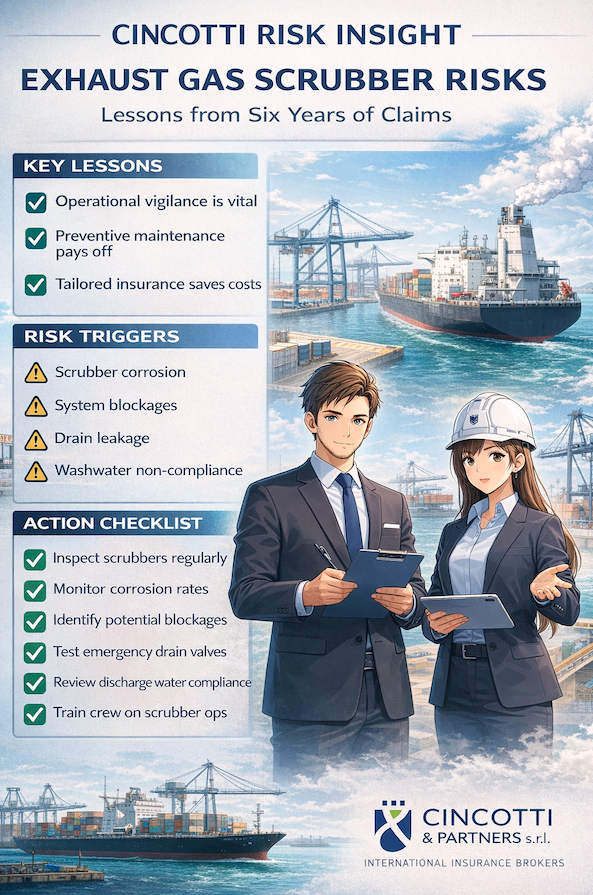
The implementation of Exhaust Gas Cleaning Systems (EGCS) was driven by IMO 2020 sulphur regulations. However, Gard’s six-year claims analysis reveals a more complex reality—where compliance introduces new layers of technical and insurance exposure.
Corrosion: the primary failure driver
The dominant risk factor is accelerated corrosion, triggered by:
- unsuitable construction materials
- aggressive washwater chemistry
- flawed design or installation
This is not gradual deterioration—it is often rapid and destructive, affecting:
- piping systems
- valves
- scrubber towers
Operational failures and maintenance gaps
A second category of claims arises from:
- inadequate maintenance planning
- improper system operation
- insufficient crew training
Scrubbers are not plug-and-play systems—they require engineering-level management.
Environmental and regulatory exposure
Washwater discharge creates additional risks:
- non-compliance in restricted ports
- environmental contamination concerns
- fines and vessel detentions
This extends risk beyond machinery into regulatory liability.
Insurance implications
From a P&I and H&M perspective:
- increased machinery damage claims
- potential exclusions linked to known defects
- underwriting reassessment required
Scrubbers fundamentally reshape a vessel’s risk profile.
Strategic conclusion
Scrubbers are no longer just compliance tools.
They are high-risk operational assets requiring structured risk governance.
CTA
Have you mapped scrubber risks across your fleet?
Are you managing them as compliance—or as a strategic exposure?
Source & Reference
Source: Gard
Based on 6 years of real claims data
#ScrubberRisk #MarineInsurance #ShippingIndustry #EGCS #Pandi #HullAndMachinery #RiskAdvisory #ClaimsData #MaritimeSafety
“Knowledge, precision, responsibility — every day in shipping and beyond.”
