
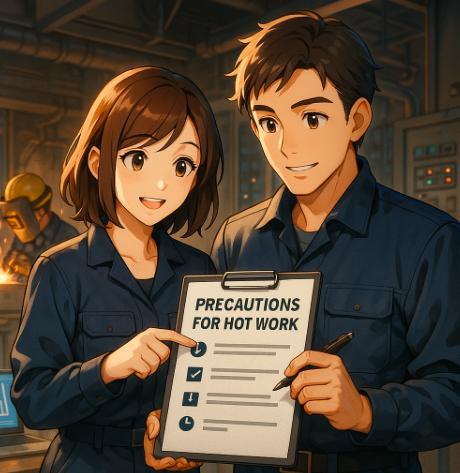
The IMO defines hot work as any operation involving open flames or spark-producing tools — anywhere onboard.
Britannia’s latest guidance reminds us: every company’s SMS must define and strictly manage these operations.
Before striking the arc:
- assess if cold work or temporary repairs are feasible,
- confirm if class or cargo conditions impose constraints,
- issue a time-limited, scenario-specific Hot Work Permit.
Safety is never routine — it’s a deliberate act of discipline.
📄 Read the full Britannia Loss Prevention guidance below ⬇️
💬 How does your team manage hot work planning and risk assessments onboard?
#Maritime #Shipping #LossPrevention #SafetyCulture #RiskAssessment #CrewSafety #PandiClub #Britannia
Britannia P&I underscores the importance of preventive planning when performing hot work operations.
Welding, cutting, or any activity involving open flames remain among the most hazardous tasks onboard—especially on vessels carrying flammable cargo or operating in confined spaces.
Every company should integrate a clear procedure within its Safety Management System (SMS) to:
- identify lower-risk alternatives (cold work),
- evaluate environmental safety conditions (ventilation, gas-free status, isolation),
- implement a Permit-to-Work system with time limits and continuous monitoring.
The guidance also reminds operators that, when hot work is performed on laden ships or involves a voyage deviation, it may be necessary to notify the P&I Club or H&M underwriters for additional insurance coverage.
At the core of all this lies training, communication, and shared responsibility among crew, officers, and contractors.
Safety is not a document — it’s a living culture, built through daily choices.
